

Pedestrian Access Control System
A pedestrian access control system regulates the flow of people through an entrance by letting them pass one at a time, and combining it with electronic access control means it only releases for someone who has presented a valid credential. Common types include tripod turnstiles, swing gates, full turnstiles, revolving doors and security interlocks, each suited to a different balance of security, throughput and user experience. This glossary entry explains what each type does, when it makes sense to combine one with digital access control, and how SimonsVoss technology fits in.
Inhalt:
▶ Definition: What is a pedestrian access control system?
In short: a pedestrian access control system lets people through a controlled entrance one at a time, and can be combined with electronic credentials so it only releases for authorised users.
A pedestrian access control system regulates the flow of people by allowing individuals to pass through a controlled access point one at a time.
A familiar example is a supermarket entrance, where a turnstile or entrance gate is often used to control the direction and flow of people entering the store.
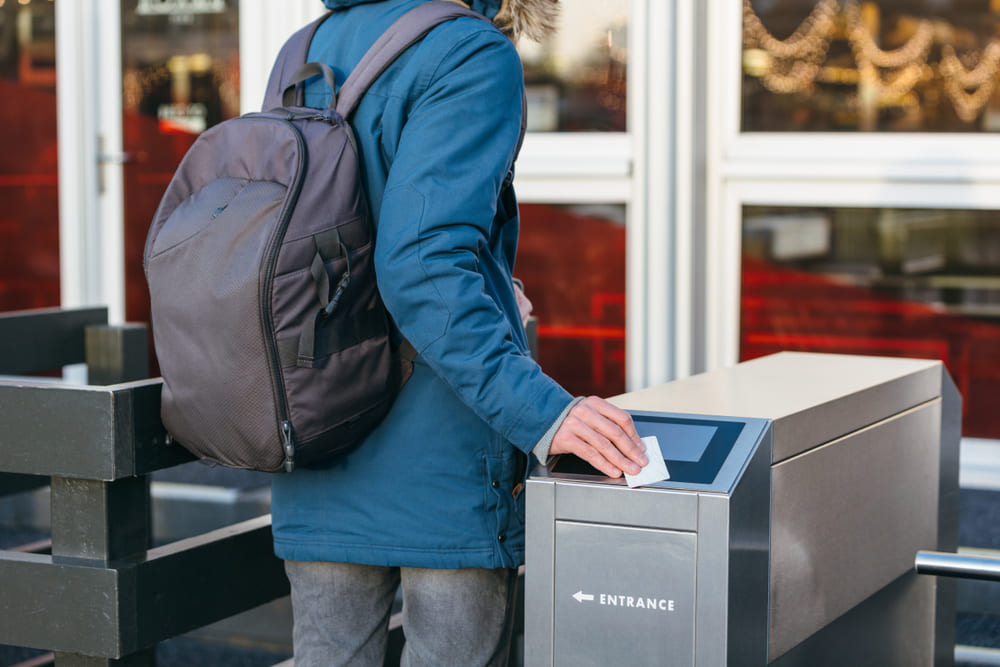
Pedestrian entrance control equipment can also be combined with an access control system. Swimming pools and leisure facilities are a typical example: a turnstile may only release once the user has scanned a valid ticket or access card, inserted the required token or otherwise demonstrated that they are authorised to enter.
In this respect, the system performs a similar function to an entrance attendant: it controls who is authorised to pass through the access point.
▶ What are the benefits of pedestrian access control systems?
In short: combining pedestrian control equipment with electronic access control improves security, reduces manual checks, and gives visibility into how an entrance is actually used.
When combined with access control, pedestrian entrance control systems can provide a high level of security. In an office building, for example, an entrance can be configured so that only people with an authorised employee ID card, access card or other electronic credential can pass through. Modern systems can also incorporate biometric authentication.
These systems can also improve operational efficiency. Reception staff no longer need to perform every access check manually because authorisation can be verified automatically. The same principle is familiar from football stadiums, where turnstiles are combined with ticket scanners.
The system can also provide useful information for building and visitor management. Depending on its configuration, data can show when an entrance is busiest, how many people use a particular access point and how usage patterns change over time.
There is also a physical deterrent effect. A suitably designed turnstile or entrance control barrier creates a visible obstacle to unauthorised access. Full-height turnstiles in particular can provide a substantial physical barrier and may therefore act as an additional deterrent.
▶ What different types are available?
There is no single type of pedestrian access control system. Different solutions are available depending on the required level of security, throughput, user experience and application.
❯ Tripod turnstile
In short: a tripod turnstile is a fixed, floor-mounted unit with three rotating arms, commonly used at swimming pools and leisure facilities.
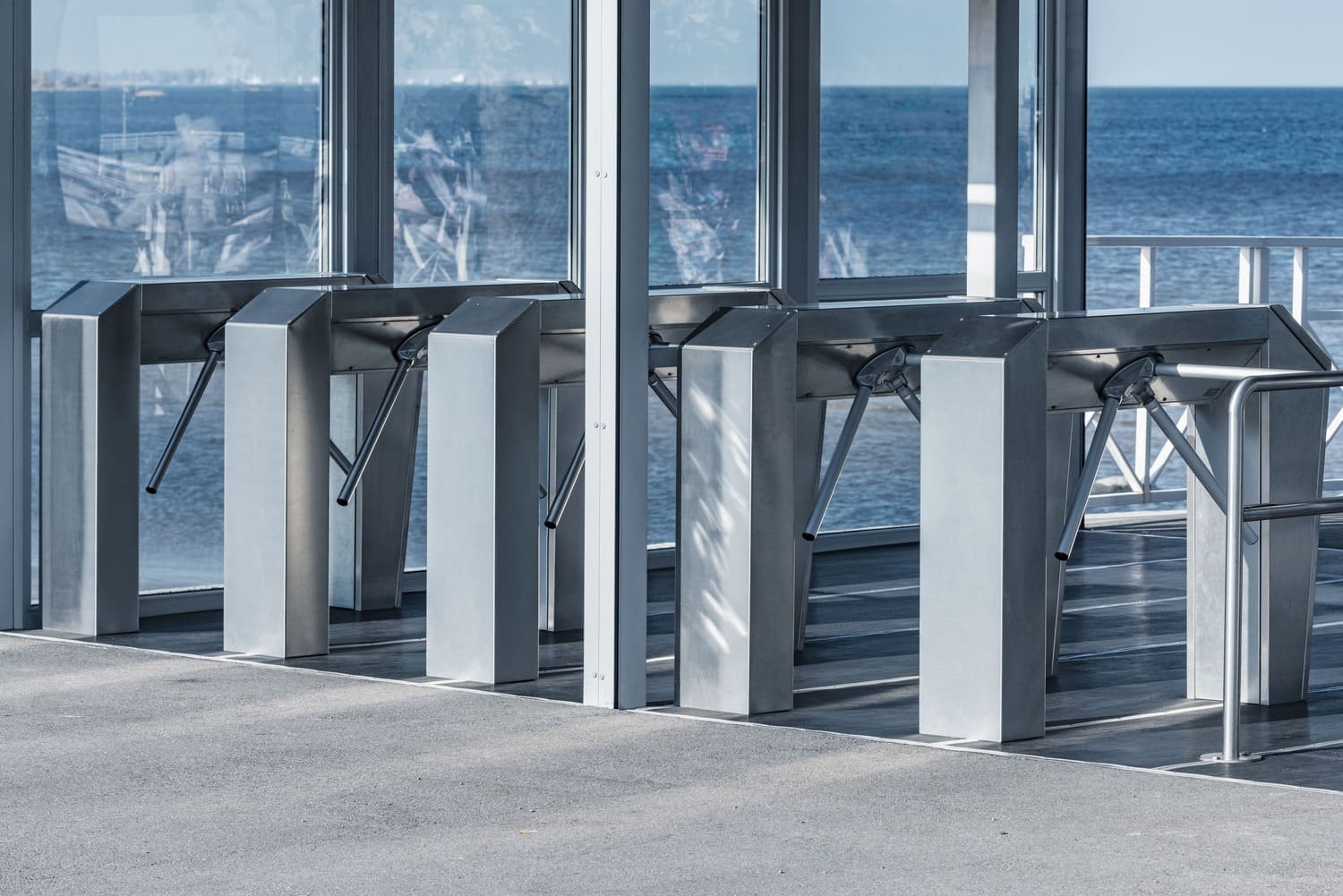
A tripod turnstile, also known as a three-arm turnstile, is commonly found in environments such as swimming pools and leisure facilities. It is usually a fixed, floor-mounted unit with three rotating arms. On suitable models, the mechanism can be configured to provide an unobstructed passage in an emergency.
Tripod turnstiles are frequently combined with access control. At a swimming pool, for example, the turnstile can release only after the user has presented a valid ticket, season pass or other authorised credential. The same principle can be combined with payment systems, allowing controlled entry to facilities such as exhibitions or attractions.
❯ Swing gates
In short: a swing gate directs pedestrian traffic in one direction, and automated versions can open on their own for approaching users.
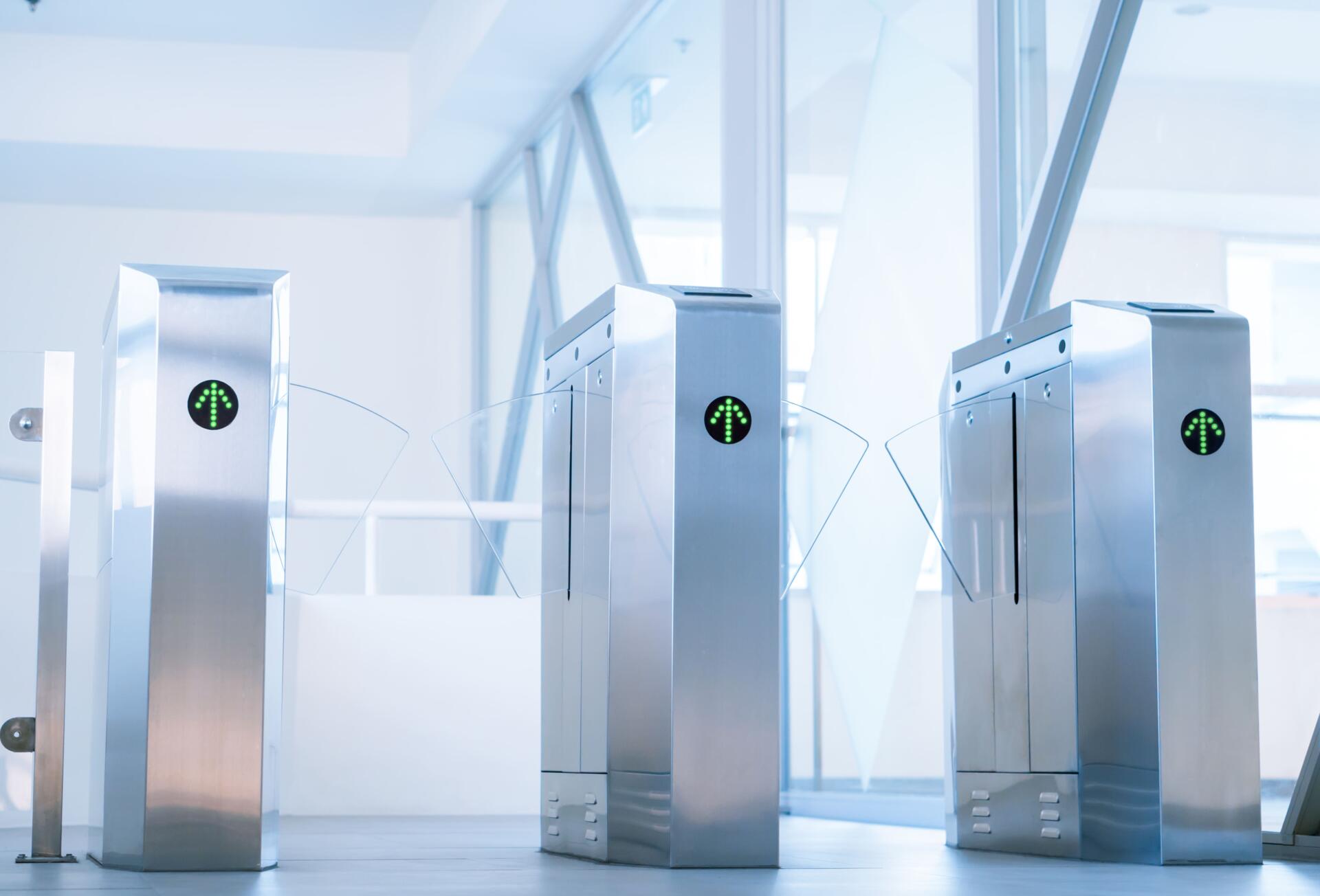
Swing gates can separate areas and direct pedestrian traffic in a particular direction. On a visitor route, for example, a swing gate can prevent people from travelling against the intended flow by opening automatically only for users approaching from the permitted direction.
Automated versions can use sensors to detect an approaching person and open the gate accordingly. Swing gates are available in different sizes and configurations. Some are approximately waist height, while larger versions can provide a more substantial physical barrier. Where required, additional panels or barriers can be incorporated to reduce the possibility of users crawling underneath.

❯ Turnstiles
In short: a turnstile uses a rotating column of arms to let people through individually, with full-height versions used wherever bypass resistance matters most, such as stadium entrances.
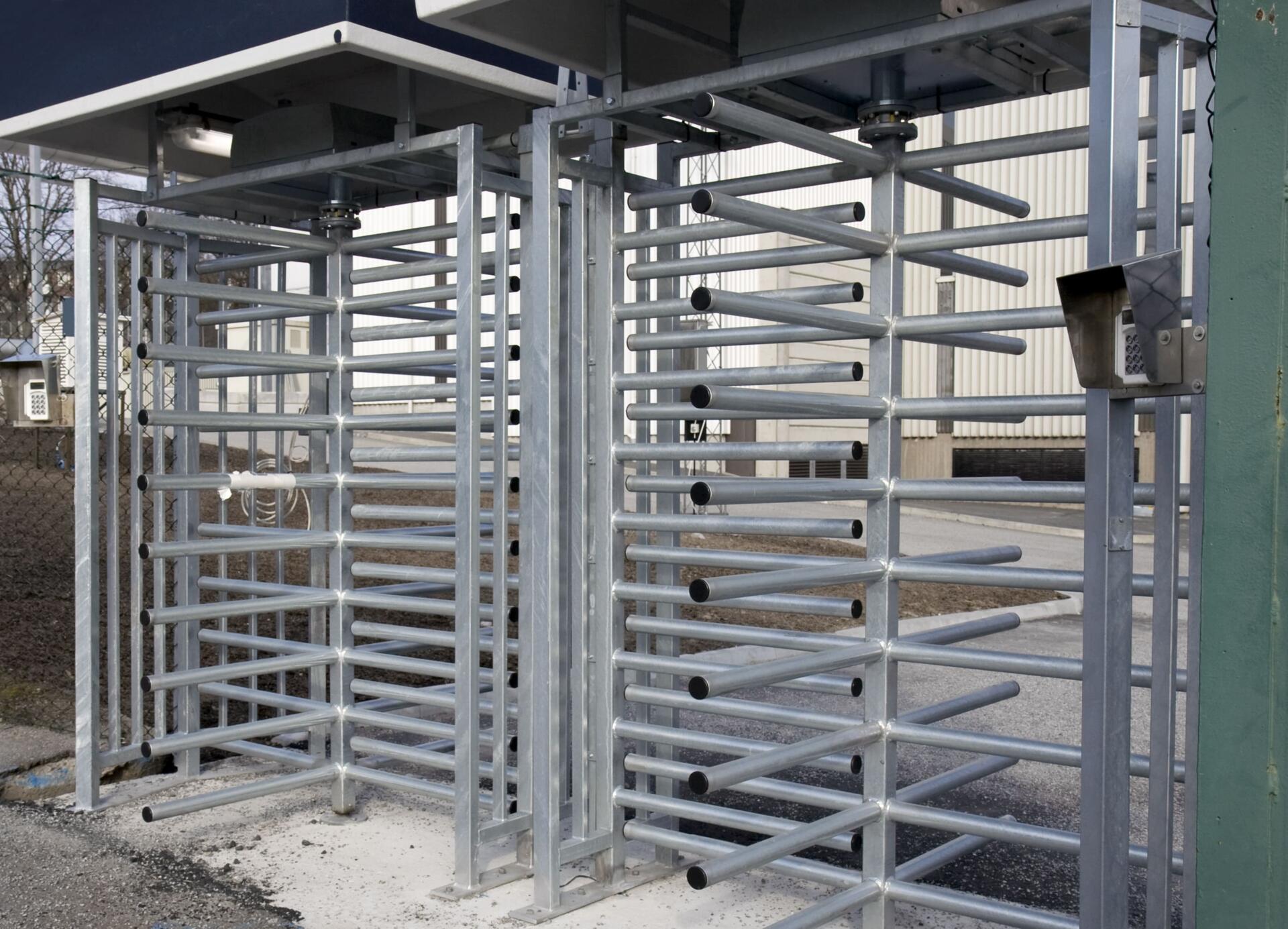
Turnstiles are another form of pedestrian entrance control equipment. They typically consist of a central rotating column fitted with several arms or wings. Because the mechanism permits people to pass through individually, it helps regulate the flow of users through an access point.
Turnstiles are available in waist-height and full-height versions. Waist-height turnstiles are familiar from everyday environments such as visitor attractions, museums and leisure facilities. Where greater physical security is required, full-height turnstiles are commonly used. Typical applications include industrial sites, commercial premises and football stadiums. Their construction makes them considerably more difficult to bypass without the appropriate access permission. Our piece on stadium security looks at how turnstiles fit into a wider venue access strategy.
Turnstiles can also be used to encourage pedestrians to slow down at potentially hazardous locations, such as certain pedestrian railway crossings.
❯ Revolving doors
In short: a revolving door is a circular enclosure of rotating leaves, commonly found at shopping centres, hotels and banks, and can include a breakout function for emergencies.
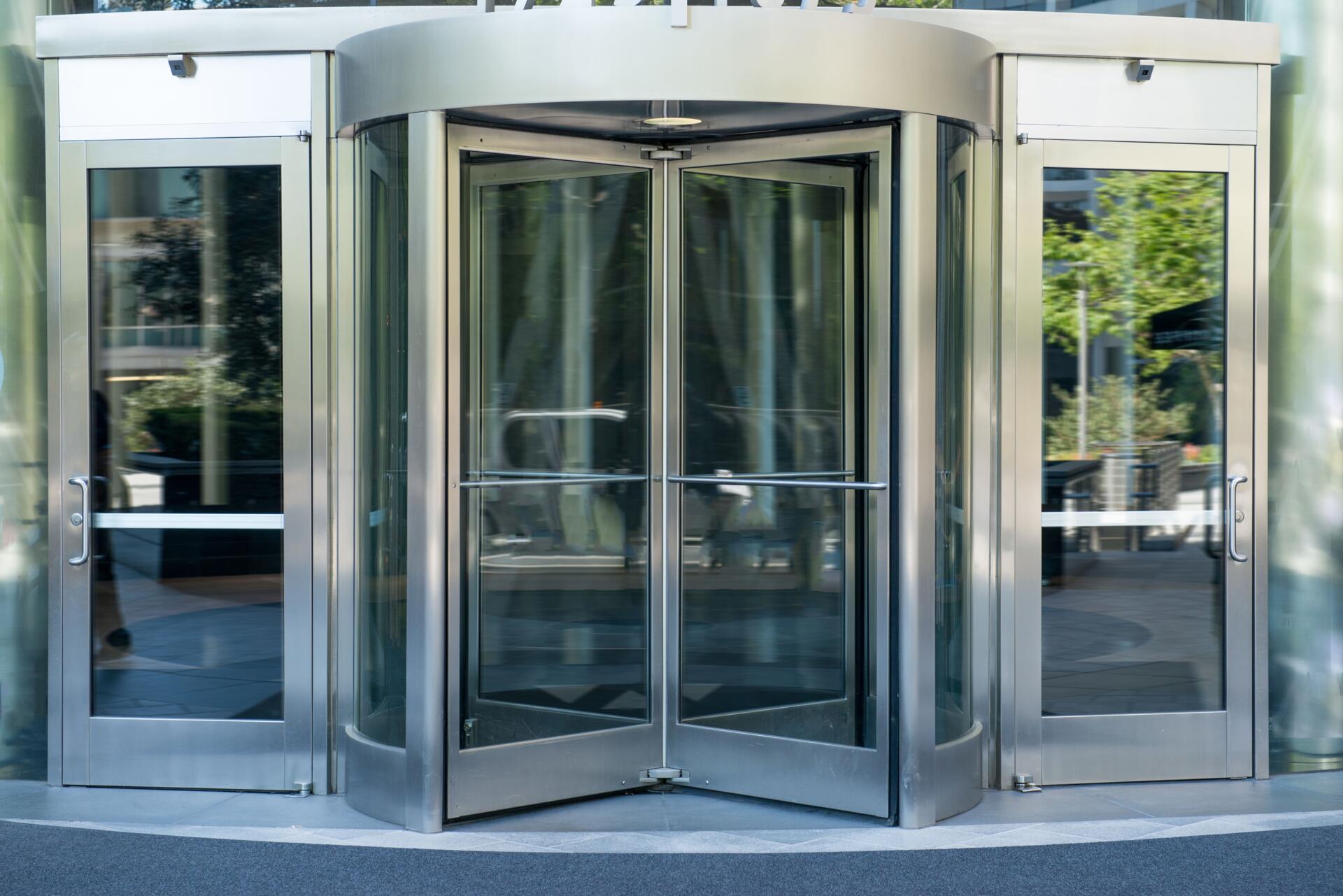
A revolving door is commonly found at the entrances to shopping centres, hotels, banks and other commercial buildings. It consists of a circular enclosure containing rotating door leaves or wings, typically arranged in two-, three- or four-wing configurations.
Revolving doors may be manually operated or powered. With powered revolving doors, safety systems can reduce the operating speed or stop the door when a potential hazard is detected.
Sensors can also detect approaching users and activate the door automatically. Depending on the specific design, suitable revolving-door systems can provide an emergency breakout function in which the door leaves are released or folded aside to create a clear passage.
❯ Security interlock
In short: a security interlock, or mantrap, uses two doors with a space between them so only one person can be authenticated at a time, commonly used in banks, government facilities and laboratories.
A security interlock, sometimes referred to as a mantrap in high-security applications, uses two controlled doors with an enclosed space between them. A user passes through the first door, which closes before the second door can be opened. This controlled sequence helps prevent unauthorised users from simply following an authorised person through the access point.
Security interlocks can also be combined with electronic access control. They are commonly used where security requirements are particularly high or sensitive information and assets need to be protected, including banks, government facilities, airports and research laboratories.

▶ Which systems are unsuitable for electronic access control?
In short: most pedestrian systems can technically be upgraded with electronic access control, but the real question is whether doing so is worth the cost for that particular entrance.
In principle, many pedestrian entrance control systems can be equipped or combined with electronic access control if the appropriate technology is available.
The more important question is whether doing so makes operational and economic sense.
A simple supermarket entrance turnstile, for example, may provide little benefit from being upgraded with sophisticated electronic access control. The technical effort and cost involved may be disproportionate to the purpose of the installation.
When upgrading from a simple mechanical or uncontrolled arrangement to digital access control, it is therefore important to consider whether retrofitting the existing equipment is worthwhile or whether replacing it with a purpose-designed electronic solution would represent the better investment.
This can become particularly relevant when an organisation's security requirements increase and an entrance that was previously freely accessible needs to become controlled.
Whether a particular system is suitable for electronic access control is therefore not solely a technical question. The intended purpose, required security level and cost-effectiveness of the solution are equally important.
▶How can digital locking technology make access more secure?
In short: pairing a turnstile or gate with an electronic credential means it only releases for an authorised user, and a lost credential can be revoked instantly without changing any hardware.
Digital locking technology provides many of the same benefits at pedestrian entrance control points as it does elsewhere within a building or site.
It helps protect buildings, premises and sites while providing significant operational advantages over conventional mechanical locking systems.
If an electronic credential such as a transponder or SmartCard is lost, its access permissions can be revoked in the system software. This allows the credential to be blocked quickly without having to replace the physical locking hardware simply because a credential has gone missing. Our guide to digital key management covers this in more detail.
By combining pedestrian entrance control equipment with digital locking technology, access to buildings, sites and events can be managed efficiently and securely.
A turnstile, for example, can remain locked until the user presents a valid electronic credential. Once the system has verified that the credential has the necessary access permission, the turnstile releases and allows the authorised person to pass.
Because authorisation is checked electronically, routine access decisions can be automated rather than requiring security or reception staff to verify every individual manually.
▶ What can SimonsVoss do for you?
Are you responsible for access control at a large organisation, managing a major event or looking for a secure way to control pedestrian access for another application?
As a specialist in digital access control systems, SimonsVoss can help you identify the right solution for your requirements. Explore how System 3060 and the wider SimonsVoss digital locking systems range can be combined with your pedestrian entrance equipment.
FAQ
What is the difference between a turnstile and a security interlock?
A turnstile uses a rotating mechanism to let people through one at a time, and is common in stadiums, museums and leisure facilities. A security interlock, or mantrap, uses two doors with an enclosed space between them, so the first door must close before the second opens, which prevents someone following an authorised user through. Interlocks are generally reserved for higher-security applications such as banks or laboratories.
Should every turnstile be connected to electronic access control?
Not necessarily. A simple entrance turnstile, such as one at a supermarket, may see little benefit from sophisticated electronic access control relative to the cost involved. Whether it makes sense depends on the required security level, the entrance's purpose, and whether retrofitting the existing equipment or replacing it with a purpose-built electronic solution offers better value.
What happens if a pedestrian access credential is lost?
The credential's access permissions can be revoked in the system software, blocking it quickly without needing to replace the turnstile, gate or other physical hardware.
Can revolving doors and turnstiles still be used as fire exits?
Suitable revolving-door systems can include an emergency breakout function that releases or folds the door leaves aside to create a clear passage, and some tripod turnstile mechanisms can be configured to allow unobstructed passage in an emergency. The specific model and its approved configuration should always be checked against the building's escape strategy.