

Passive, Semi-Passive and Active Transponders
A transponder is a communications device that receives and transmits signals for contactless identification, and comes in three main types: passive, semi-passive and active. The type determines whether it needs a battery, how far it can communicate, and whether the user has to actively trigger it. This glossary entry explains how each type works, compares their characteristics side by side, and looks at how transponders are used in digital locking technology.
Inhalt:
▶ What is a transponder?
In short: a transponder is a device that receives and transmits signals for contactless identification, and the term itself combines "transmitter" and "responder".
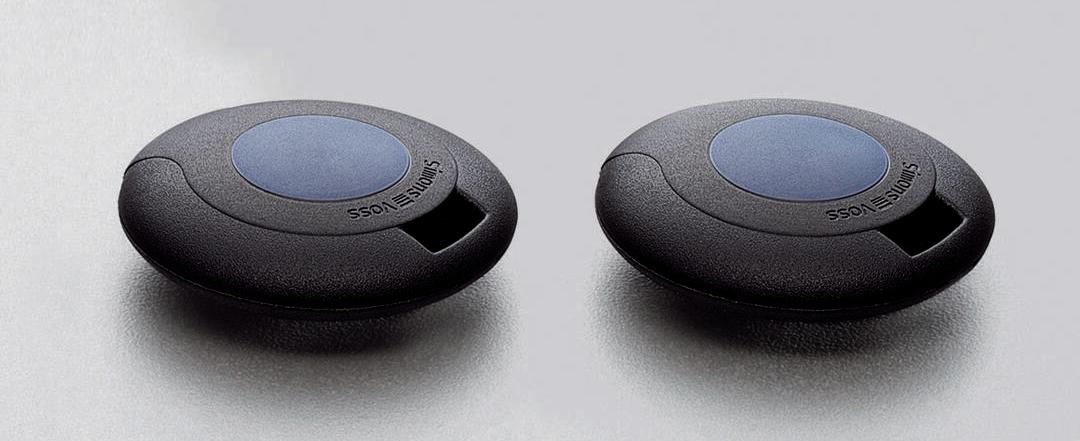
In general terms, a transponder is a communications device capable of receiving and transmitting signals. The term combines the words "transmitter" and "responder". In RFID applications, transponders enable contactless identification.
There are three main types: passive, semi-passive and active transponders.
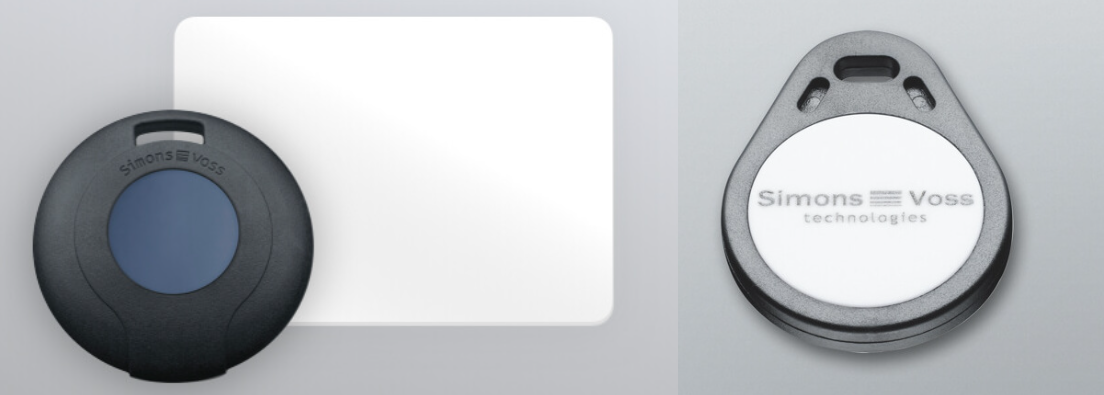
Transponders come in many different forms, including plastic cards, key fobs, wristbands and coin-shaped tags. They are used in a wide range of applications, from anti-theft systems and inventory management to timekeeping and access control.
▶ What types of transponder are there?
: : Passive transponder
In short: a passive transponder has no battery and draws its power from the reader's electromagnetic field, trading a short operating range for a very long service life.
A passive transponder has no internal power source. Instead, it obtains the energy it needs from the electromagnetic field generated by the reader.
Because there is no battery to discharge, passive transponders can have a very long service life. The trade-off is a comparatively short operating range. A reader is required to supply energy to the transponder and read its stored data.
Although this may sound highly technical, passive transponders are part of everyday life. Contactless payment cards are one familiar example. Passive transponders are also used in industrial testing and monitoring applications, for example to communicate switching states to a reader without physical contact.
: : Semi-passive transponder
In short: a semi-passive, or battery-assisted passive (BAP), transponder has its own battery to power additional functions, but still relies on the reader's field to communicate.
A semi-passive transponder shares some characteristics with a passive transponder, but there are important differences.
Semi-passive transponders have their own power source, usually a battery. This internal power supply can support additional functionality and improve performance. However, because the transponder relies on a battery, its service life is limited and the battery may eventually need to be replaced.
Unlike a fully active transponder, a semi-passive transponder does not use its battery to actively generate the RF signal required for communication back to the reader. It still relies on the reader's field for communication. This type of transponder is therefore also commonly described as a battery-assisted passive (BAP) transponder.
Like passive transponders, semi-passive transponders respond automatically when they enter the appropriate reading range, so the user does not normally need to initiate the interaction manually.
Where deliberate user activation is required, an active transponder can provide a more suitable solution.
: : Aktive transponder
In short: an active transponder has its own power source and transmitter, so it can be deliberately triggered by the user rather than relying solely on the reader's field.
An active transponder has its own power source and transmitter. In access control applications, it can therefore actively transmit a signal rather than relying solely on energy supplied by a reader.
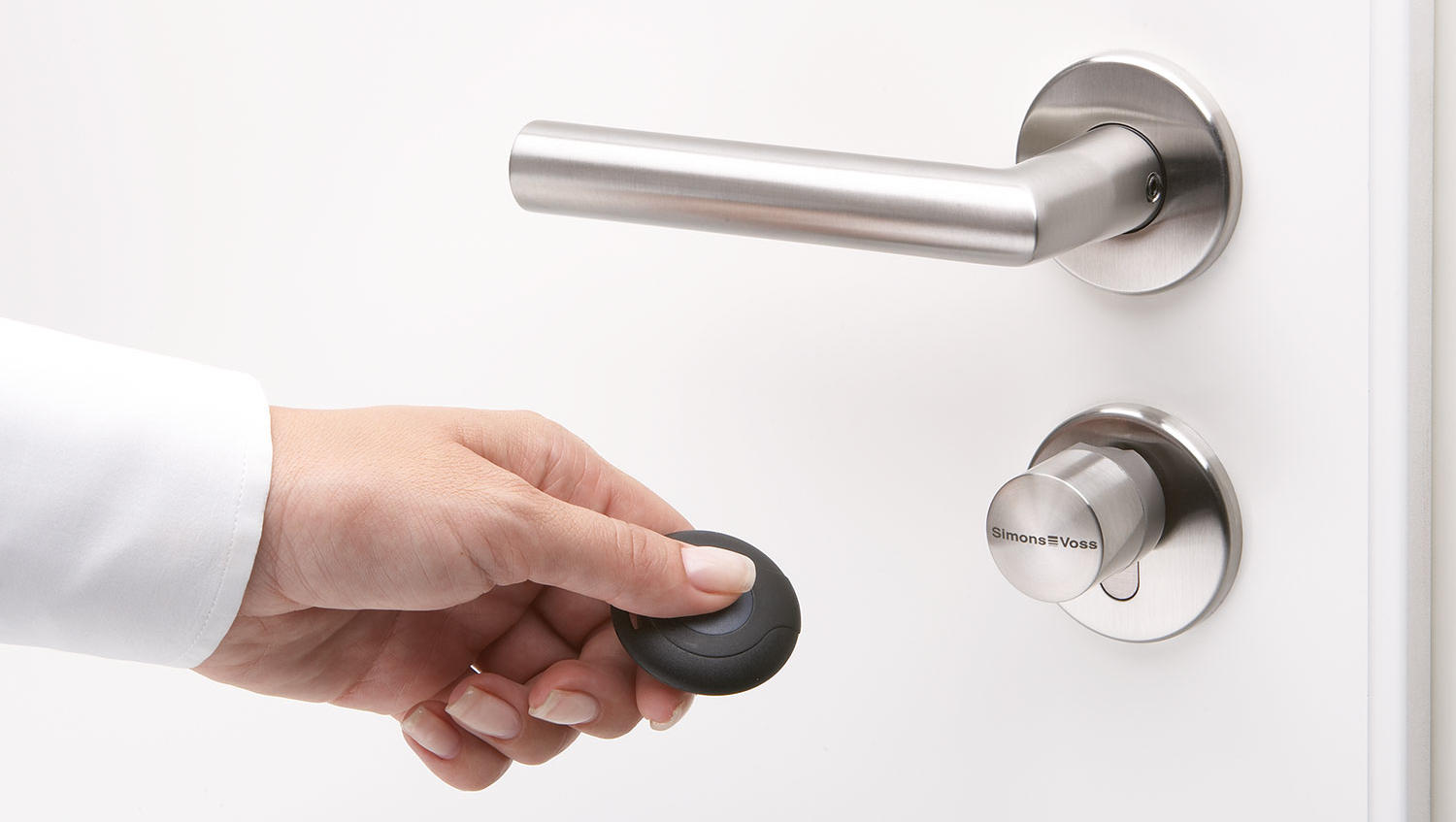
Depending on the system, activation can be deliberate, for example by pressing a button on the transponder. SimonsVoss active transponders operate on this principle: the user holds the transponder near the digital locking device and presses the transponder button to initiate the required action.
Active technology can offer a greater operating range and additional functionality compared with passive solutions. The achievable range depends on the particular technology, frequency, system design and application.
Active transponders are used in applications including security systems, vehicle immobilisers, the tracking of people, vehicles or tools, and electronic toll systems.
▶ Comparing the different types of transponder
The three types of transponder have different characteristics and are therefore suited to different applications.
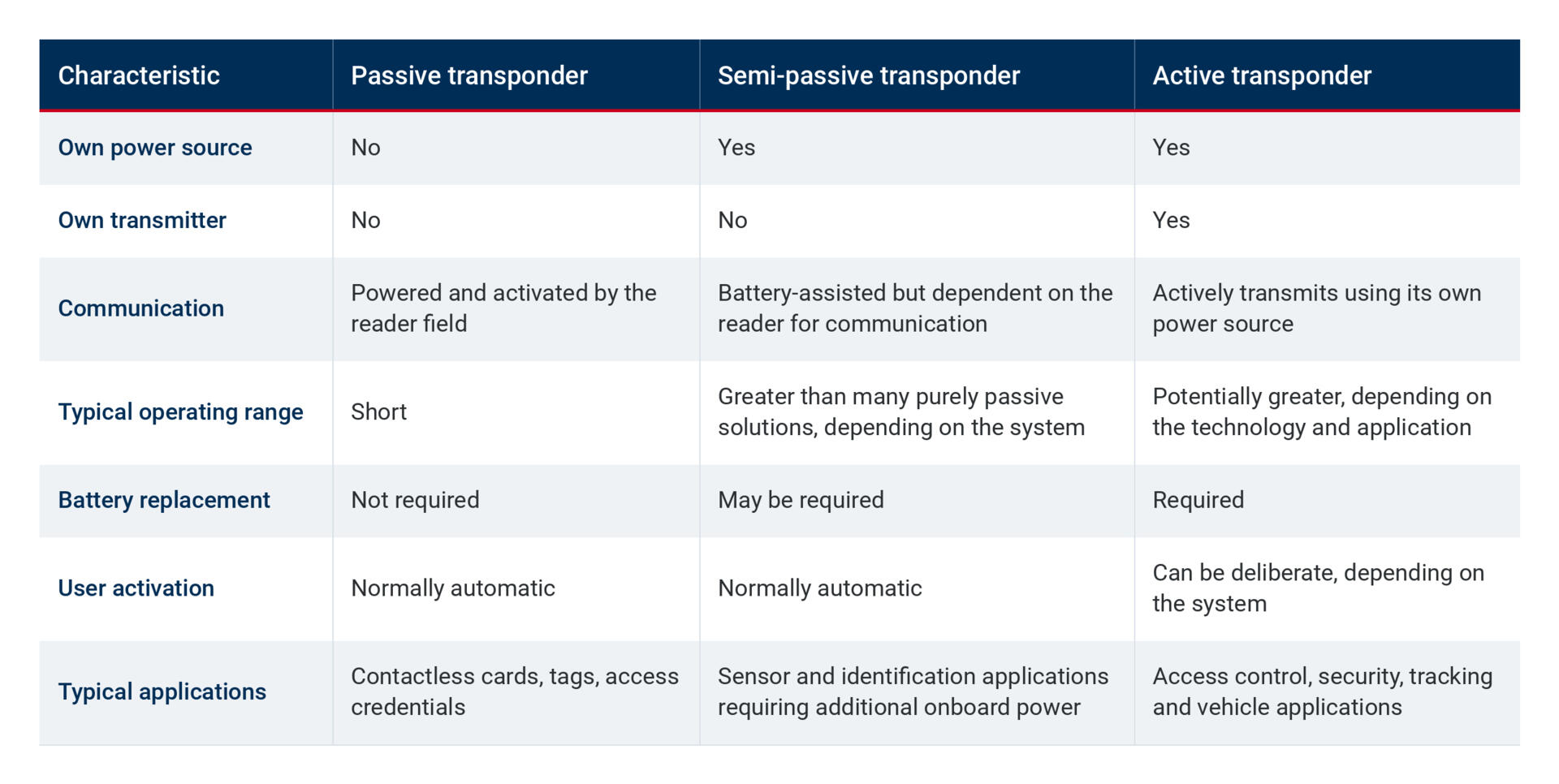
The most suitable transponder therefore depends on the application. Passive solutions are particularly attractive where compact dimensions, minimal maintenance and long service life are priorities. Semi-passive technology combines passive communication principles with an onboard power supply, while active transponders provide their own power for active transmission and can support greater range and additional functionality.
▶ Transponders in digital locking technology
In short: in a digital locking system, one transponder credential can replace an entire mechanical key ring, with the added ability to revoke or reassign access electronically.
Transponders offer particular advantages in digital locking and access control systems. Their basic purpose is similar to that of a conventional key: they enable an authorised user to open a door and gain access to a building, room or other secured area.
Whereas conventional mechanical keys are associated with mechanical locking systems, digital locking systems use electronic credentials. Depending on the system, these can include passive credentials such as SmartCards and SmartTags as well as battery-powered active transponders.
SimonsVoss System 3060, for example, supports both active transponders and passive SmartCards and SmartTags. The different credential technologies can also be combined within the same system.
Like a mechanical key within a master-keyed system, a single electronic credential can provide access to multiple doors. For example, one credential could be authorised for a building entrance, a user's office and relevant storage or plant areas. Our guide to digital key management covers how this compares with a traditional master-key system in more detail.
The major difference lies in the flexibility with which access permissions can be managed.
In a conventional mechanical locking system, changing permissions once keys have been issued can involve significant administrative effort and potentially require changes to the keying arrangement. In a digital locking system, access permissions can be amended as requirements change using management software such as AX Manager.
If an employee needs access to an additional room, the relevant permission can be added. If access to an area is no longer required, the permission can be revoked.
Another major advantage is the ability to block an electronic credential if it is lost or stolen. Rather than replacing affected cylinders or making extensive changes to a mechanical locking system, the lost credential can be disabled within the digital system and a replacement issued.
This makes transponder-based access particularly useful for organisations with large numbers of users, changing access requirements or complex building portfolios, where efficient credential management can significantly reduce the administrative burden associated with conventional keys.
FAQ
What is the difference between a passive and an active transponder?
A passive transponder has no battery and draws its power from the reader's field, giving it a long service life but a short operating range. An active transponder has its own power source and transmitter, so it can transmit over a greater range and, in systems such as SimonsVoss, be deliberately activated by pressing a button.
What does BAP mean in relation to transponders?
BAP stands for battery-assisted passive, another name for a semi-passive transponder. It has its own battery to support additional functionality, but still relies on the reader's field to communicate, unlike a fully active transponder which transmits using its own power.
Do passive transponders need their battery replaced?
No. A passive transponder has no internal power source and draws its energy from the reader's electromagnetic field, so there is no battery to replace. This is one reason passive transponders can have a very long service life.
Can different transponder types be used within the same locking system?
Yes. SimonsVoss System 3060, for example, supports active transponders alongside passive SmartCards and SmartTags, and the different credential technologies can be combined within the same system.
Would you like to benefit from transponder-based locking technology?
Get in touch and we will work with you to find the right digital access control solution for your organisation.
Would you like to benefit from transponder-based locking technology?
Get in touch and we will work with you to find the right digital access control solution for your organisation.