

Types of Door Locks
A door lock is a mechanical or electronic device fitted to a door to control entry and secure a building. There are eight types in common use across UK homes and commercial premise, each is suited to a different door type and level of security, and this glossary entry explains how each one works, where it is best used, and what distinguishes it from the others.
Contents:
▶ Which lock is suitable for which door?
Door locks are an essential element of security in residential and commercial buildings. There are many different types, some of which differ considerably in their design and operation.
Common examples include mortice locks, narrow-stile locks and padlocks. Mortice locks are among the most widely used solutions for entrance, internal and residential doors. Narrow-stile locks are primarily used in narrow-profile metal doors and gates, while padlocks are suitable for applications such as sheds, lockers and storage units.
As buildings become increasingly digital, electronic credentials are also playing a growing role, offering numerous advantages over conventional mechanical keys. The range of locking solutions available today is extensive, with significant differences in operation, design and appearance.
The following sections explain eight common types of door lock, together with their key benefits and typical applications.
▶ The 8 most common types of door lock
❯ Mortice lock
In short: a mortice lock is recessed into the door leaf itself, rather than fitted to its surface, and is the most widely used lock for entrance and internal doors in the UK.
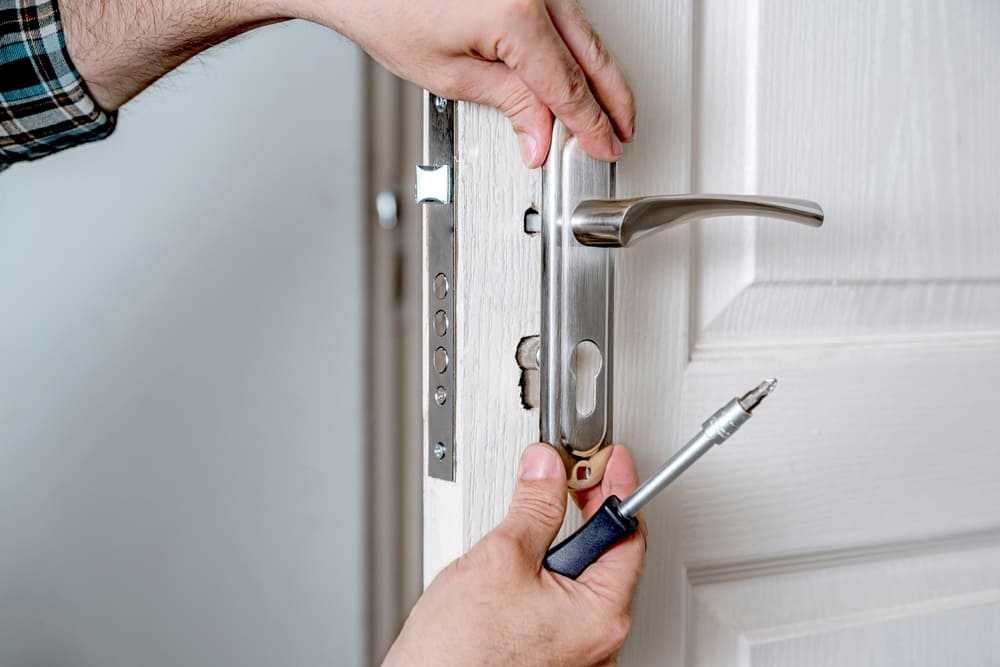
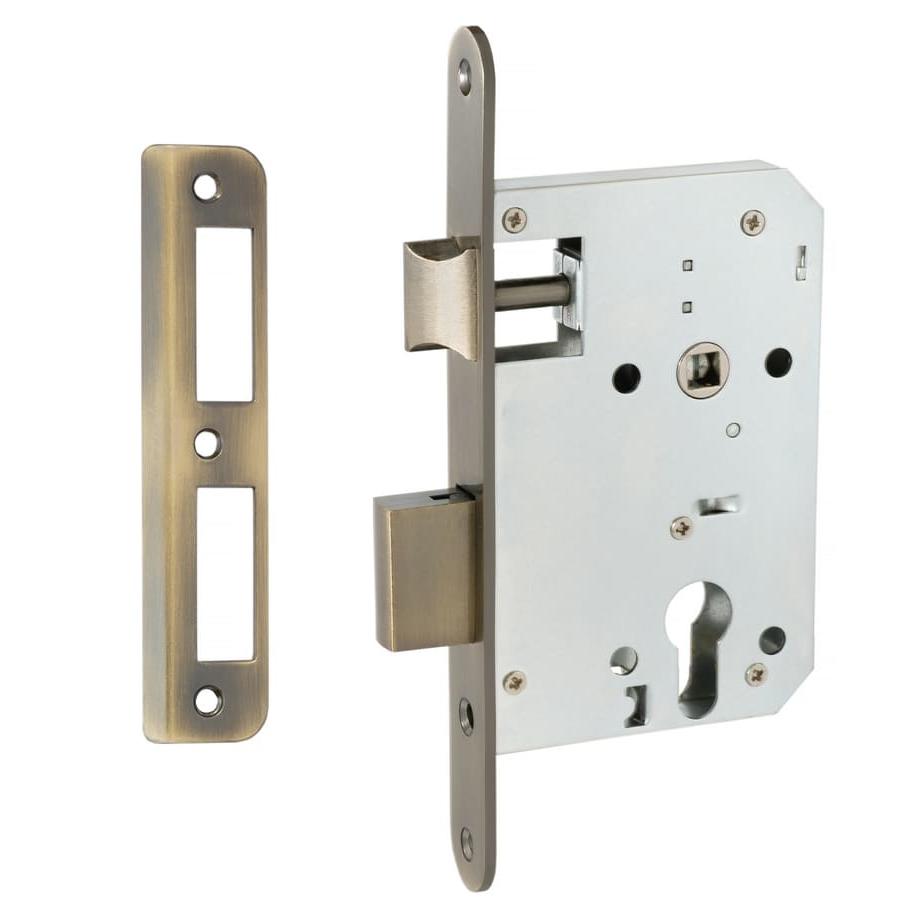
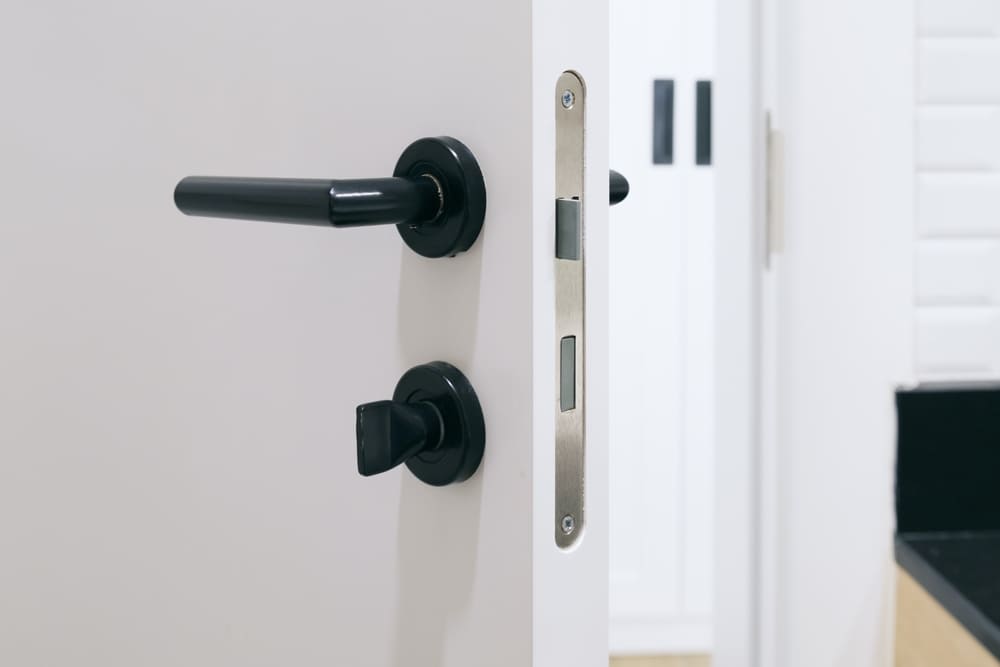
The lock body is recessed into a pocket or mortice in the door leaf and consists of several components, including the lock case, cover plates and latch. Only the latch and deadbolt are visible from the outside. The lock is secured to the door via the forend, the vertical metal plate visible at the edge of the door.
Closing the door engages the latch, while turning the key operates the locking mechanism. Mortice locks are commonly combined with lever handles or other door furniture. Because the lock body is recessed into the door leaf, material needs to be removed to create the mortice, which can locally reduce the amount of material around the lock case.
Mortice locks are widely used for entrance and internal doors and, where appropriately specified, for external applications.
One advantage is that the lock is installed within the door rather than simply being screwed onto its surface. Additional security features can include multipoint locking, where several locking points engage with their corresponding keeps, as well as anti-pick and anti-drill protection, depending on the model and complete doorset.
A disadvantage of conventional key-operated solutions is the impact of key loss. Remedial work may be required to restore security, and mechanical locks can also remain vulnerable to manipulation or forced attack, depending on their security specification. For a comparison of how mortice locks are treated across different door types, see our piece on furniture lock types in the UK, from mortice to digital.
❯ Narrow-stile lock
In short: a narrow-stile lock is a compact mortice lock built to fit the limited depth of aluminium or steel door profiles, commonly used on commercial and public-sector entrances.
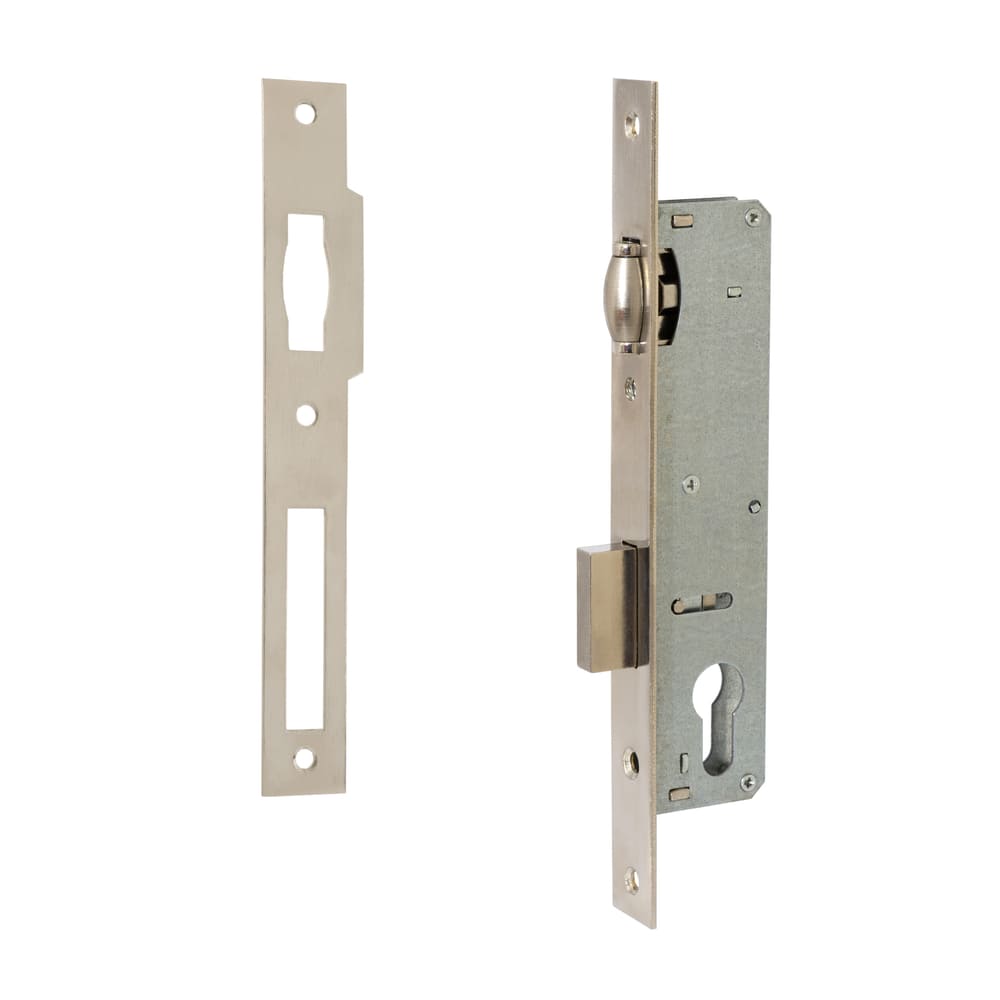
A narrow-stile lock is similar in principle to a conventional mortice lock but is specifically designed for doors with narrow metal or aluminium profiles. It is commonly used in metal-framed doors and gates, including applications with more demanding security requirements.
Essentially, it is a compact mortice lock designed to fit within the limited depth and width of a narrow door stile. Its principal components include the lock case, latch, deadbolt and keep or strike plate.
Its compact design makes it particularly suitable for aluminium and steel door systems in commercial buildings, offices and public-sector environments.
Narrow-stile locks can also be specified for applications involving fire-resisting or acoustic doors. However, the lock must be suitable for the particular doorset and its required performance. A lock should not be assumed to be suitable for a fire door simply because it physically fits.
Installation can also be more involved than with simpler lock types and may require specialist tools and expertise.
❯ Euro profile cylinder
In short: a euro profile cylinder is a replaceable pin-tumbler mechanism fitted into a lock case, and its main advantage is that it can be swapped out without replacing the whole lock.
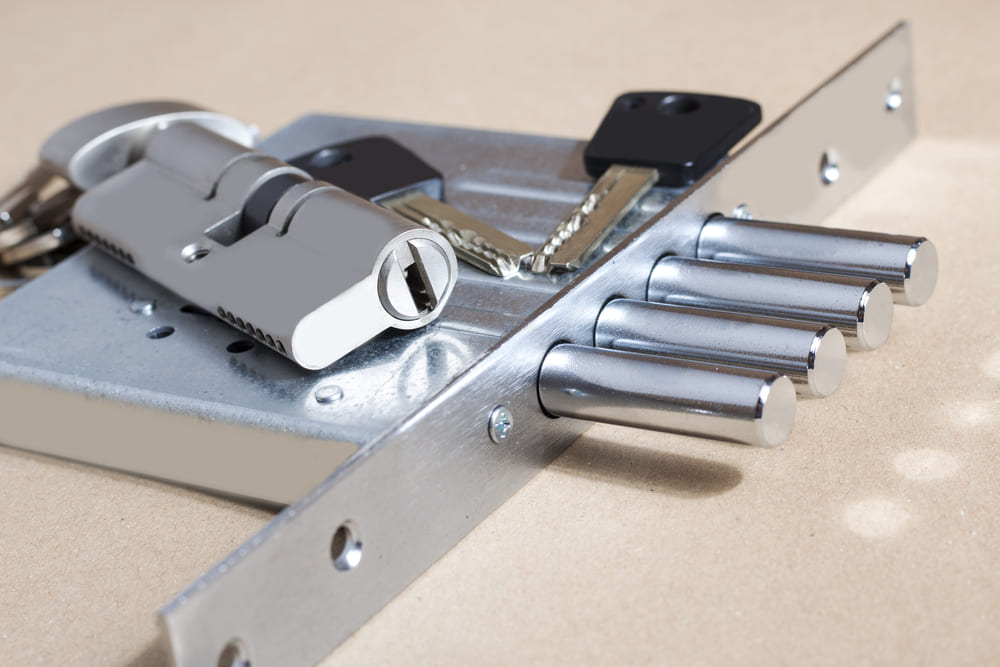
The cylinder comprises a housing containing a rotating plug, together with components such as pins and springs. In a conventional pin-tumbler cylinder, the pins prevent the plug from rotating until a correctly cut key is inserted. When the correct key aligns the pins at the shear line, the plug can turn.
As the plug rotates, the cylinder cam engages with the lock mechanism to operate the latch or deadbolt.
A particular cylinder may be supplied with several keys that operate the same key combination, and in a locking system, cylinders can also form part of more sophisticated keying arrangements. The lock provides the physical locking action, while the cylinder controls operation of the mechanism and helps prevent unauthorised operation using an incorrect key.
Euro profile cylinders are available in a wide range of security specifications, from conventional mechanical cylinders to solutions incorporating additional electronic or physical security features, such as SimonsVoss's digital locking cylinders.
Another important advantage is replaceability. If a cylinder needs to be changed, following a key-security incident for example, it can generally be replaced without replacing the complete lock case.
❯ Padlock
In short: a padlock is a portable, detachable lock secured to a hasp or staple with a U-shaped shackle, most commonly used on lockers, gates and storage units.
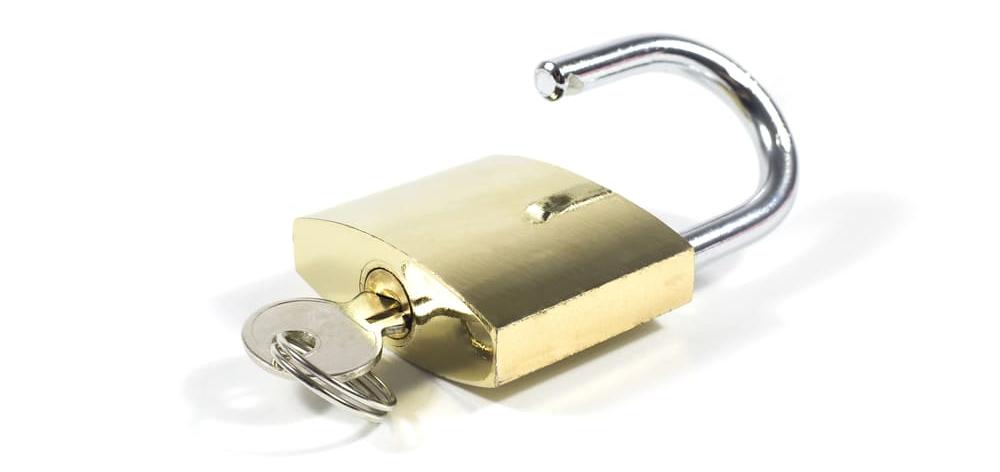
A padlock is a portable locking device that does not normally require permanent installation. It is typically attached to a hasp, staple or other suitable fixing using its U-shaped shackle.
A conventional padlock consists primarily of the shackle, locking mechanism and body. The shackle is the movable part that engages with the body when the padlock is secured. On a key-operated model, the key operates the locking mechanism to release the shackle. The body encloses and protects the mechanism against damage, tampering and, on some products, environmental exposure.
Alternatives to conventional key-operated models include combination padlocks and digital padlocks.
Padlocks are available in many sizes and security grades. Their portability and straightforward operation make them suitable for applications including lockers, toolboxes, gates, storage areas and similar assets.
However, their exposed design can make some padlocks vulnerable to physical attack using tools such as bolt cutters. The degree of protection depends heavily on the construction and security rating of both the padlock and the fixing to which it is attached.
Weather resistance is another important consideration for outdoor applications. A product intended for external use should be specified accordingly to minimise corrosion and ensure reliable operation.
❯ Rim lock
In short: a rim lock is mounted onto the surface of the door rather than recessed into it, making it quicker to install but generally less resistant to attack than a mortice lock.
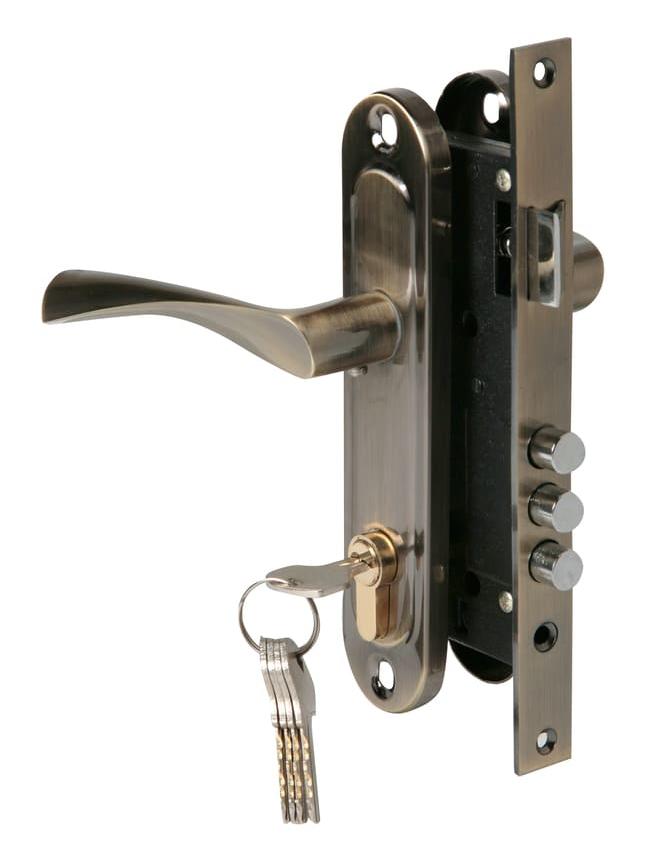
A rim lock is mounted onto the surface of a door rather than being recessed into a mortice. Surface-mounted locks of this kind are also used on smaller doors, gates, drawers and furniture.
The lock typically consists of a lock case, bolt and corresponding keep. Turning the correct key operates the bolt, which engages with the keep to secure the door.
Unlike a mortice lock, a rim lock does not require a large pocket to be cut into the door leaf, making installation comparatively straightforward.
Some models are manufactured from corrosion-resistant or protected metals and can be suitable for outdoor applications. However, suitability for external use should always be confirmed from the product specification rather than assumed from the lock type alone.
Rim locks can provide a lower level of resistance to physical attack than appropriately specified locks installed within the door. They are also not suitable for every door construction, as their fixings require an appropriate substrate and installation involves drilling or screwing into the door surface.
❯ Hook-bolt lock
In short: a hook-bolt lock uses a curved bolt to secure sliding doors, since a straight deadbolt cannot hold a sliding door closed effectively.
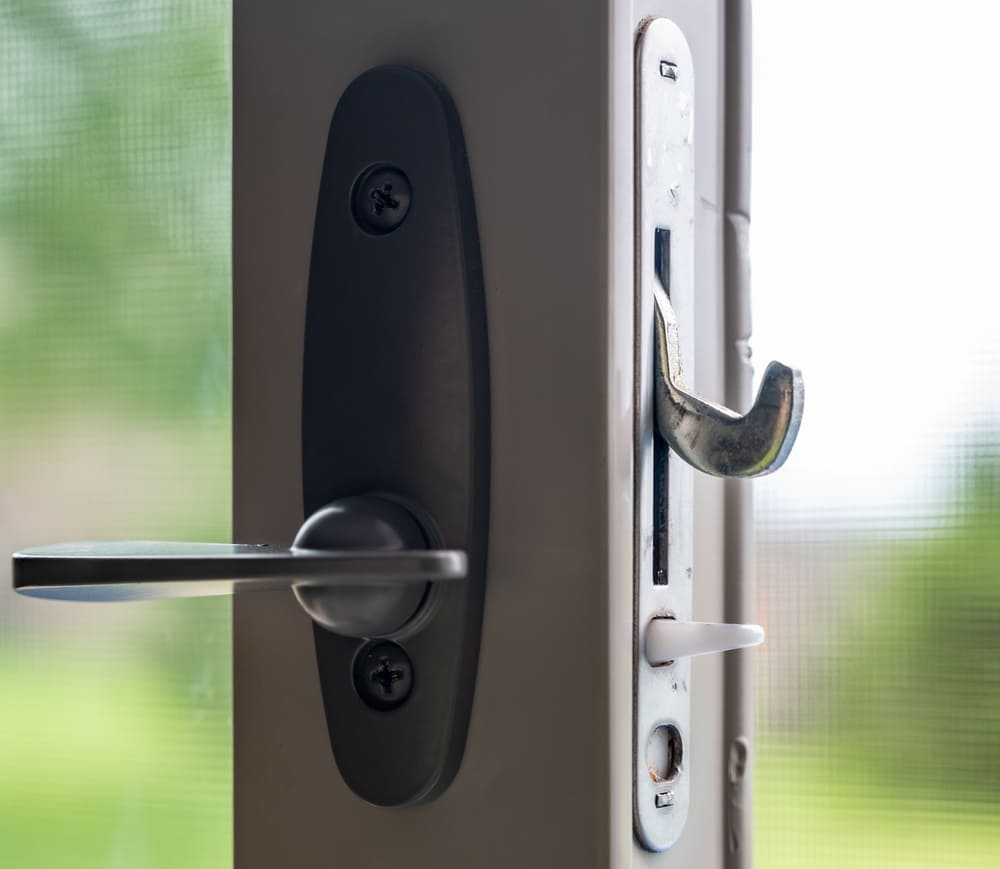
A hook-bolt lock is a specialist locking solution commonly used on sliding doors. Different versions are available depending on the required locking or privacy function.
Unlike a straight deadbolt, which may not secure a sliding door effectively, a curved or hooked bolt engages with the corresponding keep to retain the sliding door in its closed position.
A suitable flush pull or retractable edge pull may also be fitted, particularly where the door slides into a wall pocket, depending on the door design.
Sliding doors can be advantageous in offices and residential environments because they save space and can create a clean, unobtrusive appearance. The door can slide along the face of the wall or disappear into a wall pocket, depending on the system.
However, standard sliding-door locks generally provide limited resistance to forced entry and are not necessarily appropriate for high-security entrance applications. Surface-sliding doors may also require a suitable closing jamb or receiving post for the locking mechanism to engage correctly.
❯ Lever lock
In short: a lever lock secures a door using a set of internal levers that must be raised to the correct height by the key, and is typically used on internal doors rather than external entrances.
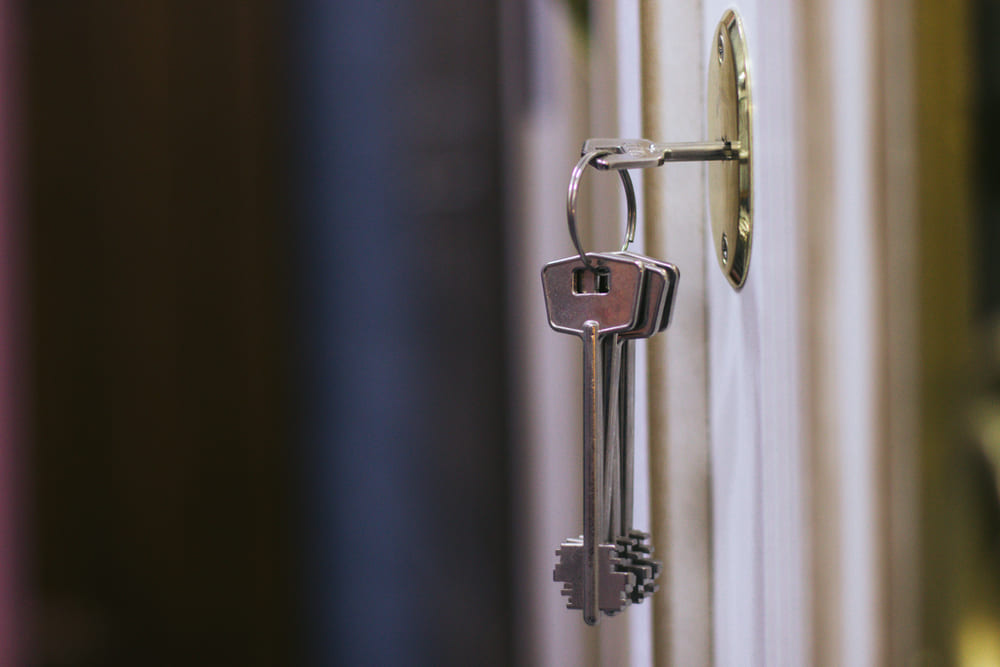
A lever lock is a traditional mechanical lock type commonly found on internal doors. The key operates a series of levers within the lock, which must be raised to the correct positions before the bolt can move.
Lever locks vary considerably in their security performance. Simple locks intended for internal doors should not be treated as security locks for external entrances or other applications requiring resistance to forced or covert entry.
The appropriate lock should therefore always be selected according to the door's function and the level of security required.
❯ WC lock / bathroom lock
In short: a WC lock is a privacy lock operated by an internal thumbturn with an external emergency release, designed for privacy rather than security.
A WC lock, also known as a bathroom lock or privacy lock, is designed to provide privacy rather than a high level of security. Many versions incorporate a vacant/engaged indicator, often displayed as green/red.
The lock allows a toilet, bathroom or changing-room door to be secured from the inside without a key. A typical arrangement uses a thumbturn internally and an emergency release externally.
Turning the thumbturn operates a spindle that engages or retracts the privacy bolt. In an emergency, the lock can normally be released from the outside using the emergency-release feature.
Despite the name, WC locks are not restricted to toilets and bathrooms. Their straightforward operation makes them suitable for other privacy applications, including changing rooms, where burglary resistance is not the primary requirement.
▶ What does SimonsVoss do differently?
The conventional lock types described above have several potential limitations. Many rely on physical keys, some require substantial preparation of the door leaf, and their level of security can vary significantly according to the lock type and specification.
As a pioneer in digital locking technology, SimonsVoss develops solutions designed to address many of the operational challenges associated with conventional mechanical keys. So what distinguishes digital locking technology from traditional locks? A full technical explanation is available in our guide to how digital locks work, but the essentials are set out below.
Digital locking cylinders do not require a conventional cut key. Instead, they are operated using an electronic credential, such as a transponder, SmartCard or SmartTag. The credential communicates electronically with the locking device, allowing the user to operate the lock without inserting a mechanical key.
This not only simplifies everyday access but also provides a significant advantage when a credential is lost.
With conventional mechanical locking systems, losing a key can require considerable administrative effort and, in some cases, replacement or rekeying of affected cylinders. For organisations with large numbers of employees and doors, this can create substantial costs and additional work.
If an electronic credential is lost, by contrast, its access permissions can be revoked electronically without affecting the normal operation of the door. Access permissions can also be changed when requirements change, and a single credential can provide authorised access to multiple doors according to the permissions assigned to the user.
Installation of a digital locking cylinder can also be comparatively straightforward. Modular components enable the solution to be adapted to different door configurations, with the cylinder installed in the existing cylinder position. This can avoid the extensive modification of the door leaf associated with some conventional locking solutions, depending on the door and product configuration.
Digital locking solutions are therefore particularly suitable for organisations and public-sector facilities that need to combine flexible access management with demanding security requirements. Explore the full range of SimonsVoss digital locking systems to see which solution fits your building.
FAQ
What is the difference between a mortice lock and a rim lock?
A mortice lock is recessed into a pocket cut into the door leaf, while a rim lock is mounted onto the surface of the door. This makes rim locks quicker to install, but mortice locks generally offer a higher level of resistance to physical attack.
Which door lock is best for an external door?
Mortice locks and narrow-stile locks, appropriately specified for external use, are the most common choices for external entrance doors. Lever locks and rim locks are generally better suited to internal doors or lower-security applications, since their construction and fixing methods provide less resistance to forced entry.
Can a euro profile cylinder be replaced without changing the whole lock?
Yes. This is one of the main advantages of a euro profile cylinder. If a cylinder is compromised, for example after a key-security incident, it can generally be replaced on its own without replacing the complete lock case.
What happens if a digital locking credential is lost, compared to a mechanical key?
A lost mechanical key can require replacement or rekeying of affected cylinders, which becomes costly across a building with many doors. A lost electronic credential can instead be revoked electronically, without affecting the normal operation of the door, and without any need to replace hardware.
Are padlocks suitable for securing external gates?
Padlocks are commonly used on gates, but their exposed design can make some models vulnerable to attack using tools such as bolt cutters. For external gates, a padlock with an appropriate security rating and weather resistance should be specified, matched to the fixing it is attached to.
Do you have questions about our digital locking solutions?
Get in touch and our team will help you find the right locking solution for your organisation.