

NFC Lock
An NFC lock is any lock that uses Near Field Communication technology to authenticate a user's smartphone, card or token and release the door, without a mechanical key. NFC is the same short-range wireless technology behind contactless payment, and it works over distances of less than 10 centimetres, so the credential has to be held close to the reader. This glossary entry explains how NFC locks work, how they fit into an existing locking system, and what to plan for during installation.
Inhalt:
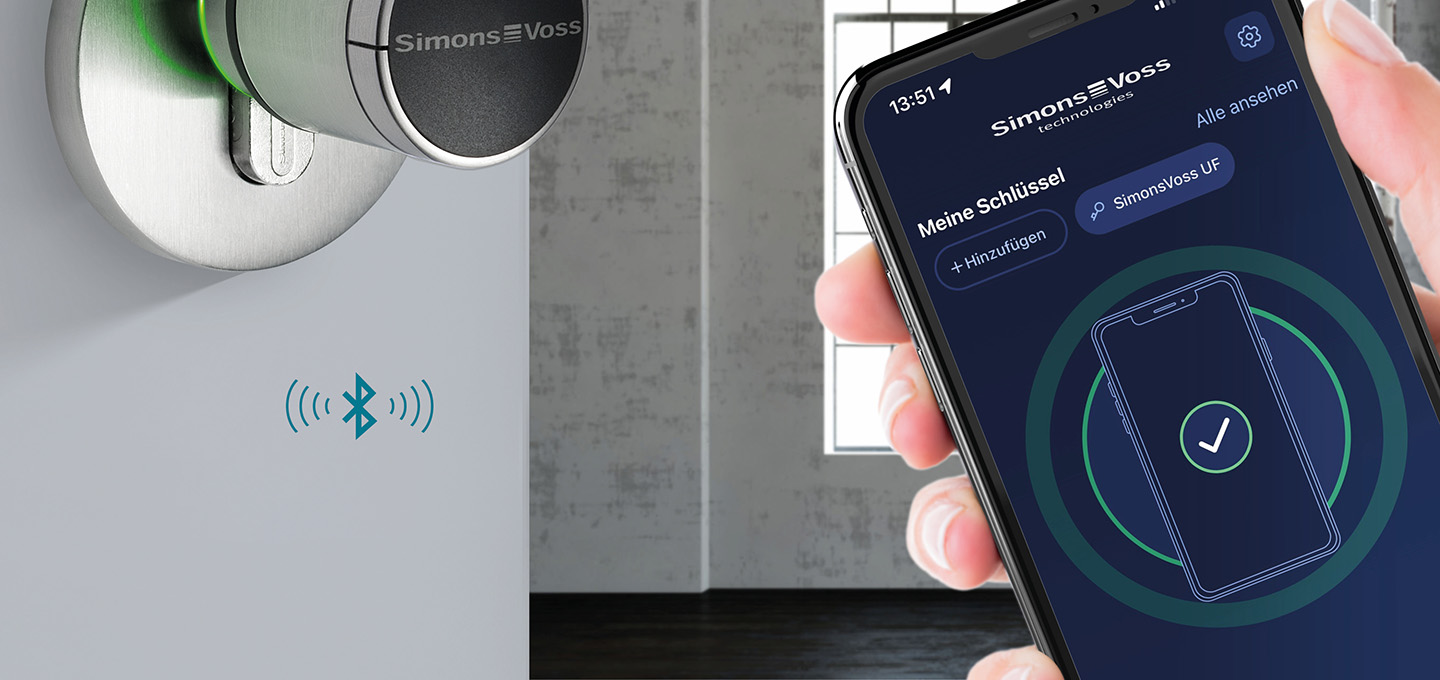
▶ What is an NFC lock?
In short: an NFC lock is any lock fitted with Near Field Communication functionality, used to identify people or objects for contactless authentication.
NFC technology is now used in a wide range of everyday applications, including payment services such as Apple Pay and Google Pay, security systems, goods logistics and public transport. It is also used in smart-home devices, healthcare and event management.
NFC is particularly well suited to contactless authentication, whether the purpose is to identify people or objects. Any lock equipped with NFC functionality can therefore be described as an NFC lock.
▶ How NFC locks work
In short: an NFC lock verifies a credential wirelessly at very short range, typically under 10cm, and releases the door once the credential's access permission is confirmed.
With an NFC lock, identification and authorisation are carried out using NFC-enabled devices such as smartphones, dedicated tokens or NFC cards.
These credentials must contain an NFC chip, a small integrated circuit. Based on RFID (Radio Frequency Identification) technology, NFC enables two devices to exchange data over very short distances, typically less than 10 centimetres. Our guide to the six core technologies behind access control explains how NFC compares with RFID, Bluetooth and other credential types.
: : Communication principle: When an authorised NFC credential is brought close to the lock, it communicates wirelessly with the locking device and transmits the security information required for verification.
The system identifies the credential and checks whether the user has the necessary access permission. If authentication is successful, the lock is released and the door can be opened.
: : Security protocols: Modern NFC locking systems use sophisticated encryption methods to protect communication and help prevent unauthorised access. Only authorised devices and credentials are granted access to the relevant areas or data.
Many NFC locks can also be configured to record access events, providing an audit trail that can support day-to-day security management, similar to the DoorMonitoring functionality available on other SimonsVoss electronic locking devices.
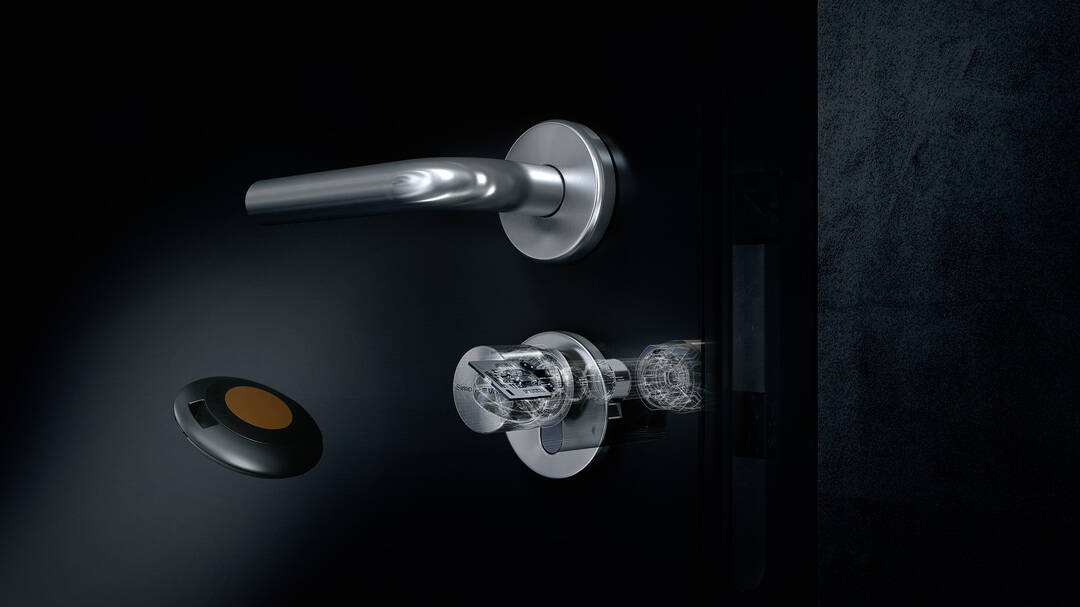
▶ Integration into existing locking systems
In short: NFC locks can usually be retrofitted to existing doors and phased in gradually, rather than requiring a full system replacement.
NFC locks can be integrated with a wide range of existing locking and access control systems. This flexibility allows NFC technology to complement or extend an organisation's existing security infrastructure.
: : Retrofitting: In short: NFC locks can usually be retrofitted to existing doors and phased in gradually, rather than requiring a full system replacement.
NFC locks can be integrated with a wide range of existing locking and access control systems. This flexibility allows NFC technology to complement or extend an organisation's existing security infrastructure.
: : System compatibility: Locking solutions such as System 3060 are designed to work with existing access control infrastructures, allowing electronic locking components to be integrated into a broader security concept alongside other credential types, such as transponders or SmartCards.
▶ Further advantages over purely mechanical locking systems
NFC locks combine modern technology with a number of practical operational benefits. Many of these advantages apply to electronic locking systems generally, but they are particularly relevant to NFC-enabled solutions.
: : Enhanced security: Encrypted communication and electronic authentication can provide additional protection compared with conventional mechanical key systems. Access is based on authorised electronic credentials rather than solely on possession of a physical key, allowing permissions to be managed digitally.
: : Ease of use: Operation is intuitive and convenient because no conventional mechanical key is required. Depending on the system, users can identify themselves using devices or credentials they already carry, such as a smartphone or NFC card.
: : Flexibility: Access permissions can be managed centrally and amended quickly when requirements change, using software such as AX Manager. For Facility Management teams, this can significantly simplify processes when employees join or leave an organisation, responsibilities change or temporary access is required for contractors and other external users.
▶ Installation considerations for NFC locks
In short: correct installation depends on checking door compatibility beforehand, using a professional installer, and properly commissioning the credentials once fitted.
Correct installation is essential to ensure that an NFC locking solution operates reliably and securely. Careful planning, appropriate technical expertise and accurate installation are therefore important.
: : Preparation: Before installation, check that the lock is compatible with the relevant door and that all required hardware and system components are available. The door construction, existing lock configuration and intended access-control functionality should all be considered when selecting the appropriate solution.
: : Professional installation: Before installation, check that the lock is compatible with the relevant door and that all required hardware and system components are available. The door construction, existing lock configuration and intended access-control functionality should all be considered when selecting the appropriate solution.
: : Commissioning: Before installation, check that the lock is compatible with the relevant door and that all required hardware and system components are available. The door construction, existing lock configuration and intended access-control functionality should all be considered when selecting the appropriate solution.
FAQ
What is the difference between an NFC lock and an RFID lock?
NFC is based on RFID technology, but works over a much shorter range, typically less than 10 centimetres, whereas other RFID-based credentials can be read from further away. This makes NFC well suited to deliberate, close-range authentication such as tapping a smartphone or card against a reader.
Can an NFC lock be retrofitted to an existing door?
Yes, in most cases. NFC-enabled locking solutions can often be incorporated into existing mechanical or electronic locking systems without major structural alterations, which allows access points to be upgraded progressively rather than all at once.
Can a smartphone be used as an NFC credential?
Yes. NFC-enabled devices such as smartphones can be used to identify and authenticate a user, alongside dedicated tokens or NFC cards, depending on the system.
Do NFC locks keep a record of who accessed a door?
Many NFC locks can be configured to record access events, creating an audit trail that supports day-to-day security management. Where these records relate to identifiable individuals, their processing and retention must comply with applicable UK data-protection requirements.
Do you have questions about digital locking technology?
Get in touch and we will be happy to advise you on the right solution for your individual security and access requirements.